A friend texts, “Running late. ETA 15 mins.” You understand they’re expected to arrive in about 15 minutes, but what exactly does ETA mean, and why is it used so often?
The abbreviation has become a regular part of everyday communication. It appears in text messages, emails, navigation apps, food delivery services, business meetings, and package tracking systems. Because it is short and easy to understand, people use it to quickly share when they expect to arrive or when something is expected to be completed.
Learning the eta meaning helps you communicate more clearly in both personal and professional situations. Whether you’re chatting with friends, coordinating with coworkers, waiting for an online order, or tracking a flight, knowing how and when to use this abbreviation can prevent confusion.
This guide explains what ETA means, how it is used in text messages, where it originated, how it differs from similar terms, and why it remains one of the most useful abbreviations in modern communication.
What Is ETA?
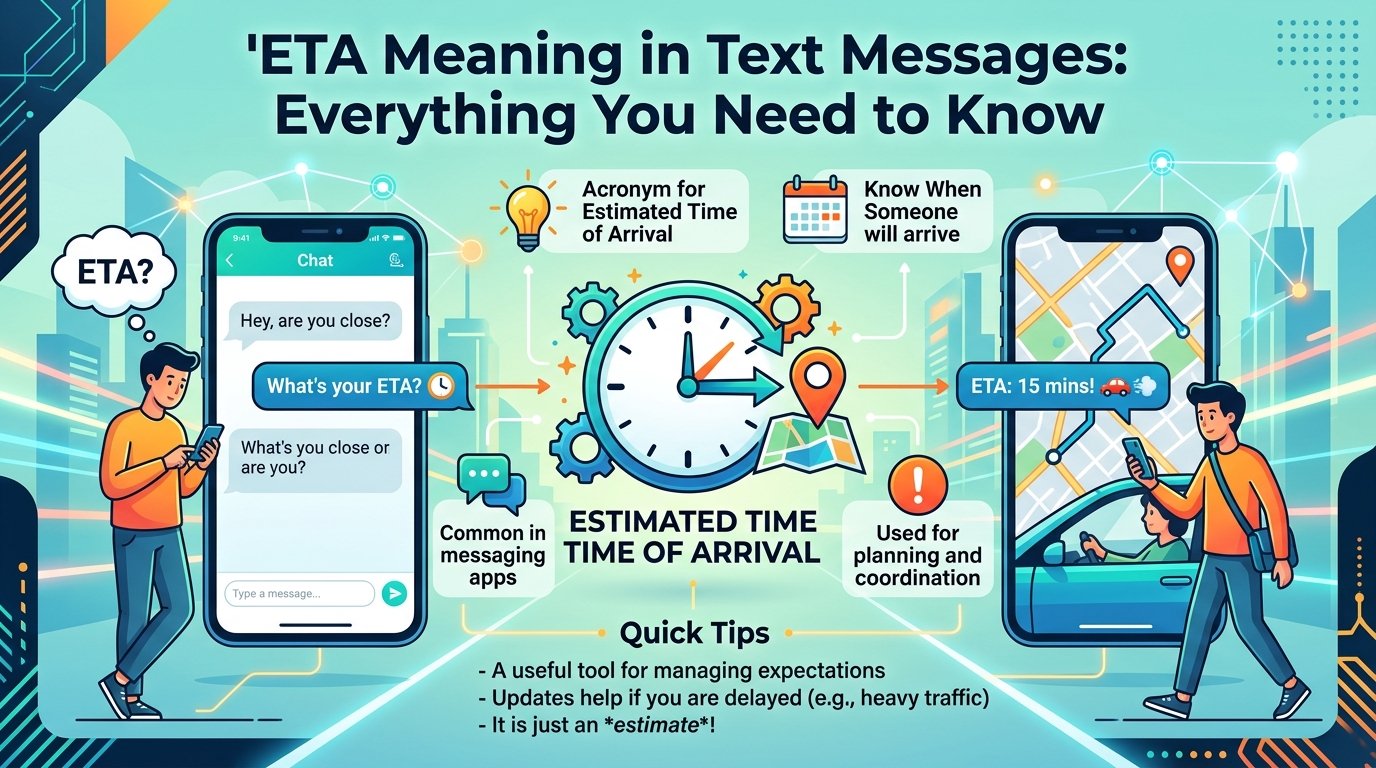
ETA stands for Estimated Time of Arrival. It refers to the expected time when a person, vehicle, shipment, or service will reach its destination. The word “estimated” is important because it indicates that the arrival time is only a prediction based on current conditions.
For example, if someone says, “My ETA is 5:30 PM,” they expect to arrive around that time. However, traffic, weather, or unexpected delays may change the actual arrival time.
The eta meaning extends beyond travel. Businesses use it when discussing project completion dates, delivery companies use it to estimate package arrivals, and customer service teams provide ETAs when resolving technical issues.
Today, ETA is recognized worldwide because it provides a simple and effective way to communicate timing without giving a guaranteed arrival time.
ETA Meaning in Text Messages
When people search for eta meaning of ETA in text, they usually want to know how the abbreviation is used in everyday conversations.
In text messaging, ETA simply means the time someone expects to arrive. Instead of typing a long sentence, people often send a quick update using an abbreviation.
Examples
Friend: Where are you?
You: ETA 10 minutes.
Coworker: Are you joining the meeting?
You: ETA around 2:00 PM.
Family Member: Dinner is almost ready.
You: Great! ETA 20 minutes.
Using ETA keeps conversations short while still providing useful information.
Why ETA Is So Popular
ETA has remained popular because it saves time and avoids unnecessary explanations.
Instead of writing:
“I think I’ll arrive in approximately twenty-five minutes, depending on traffic.”
Most people simply write:
“ETA 25 mins.”
This makes conversations faster and easier to understand.
Several factors have increased the popularity of the meaning of the ta in text
- Smartphones
- GPS navigation
- Ride-sharing apps
- Online shopping
- Food delivery services
- Remote work
Many apps automatically calculate estimated arrival times, making ETA part of everyday language.
Where ETA Is Used
Although many people associate the eta with meaning in text, it is widely used in many industries.
Transportation
Drivers use ETA while traveling.
Navigation apps display updated arrival estimates based on live traffic conditions.
Example:
“Current ETA: 4:35 PM.”
Food Delivery
Restaurants and delivery platforms provide estimated arrival times for meals.
Customers can see:
- Order received
- Food being prepared
- Driver assigned
- Driver nearby
- Updated ETA
Shipping
Package tracking systems show expected delivery times.
Companies such as UPS, FedEx, DHL, and Amazon update throughout the shipping process.
Aviation
Airlines continuously calculate estimated arrival times based on weather, flight paths, and airport traffic.
Passengers receive updated arrival information through airline apps and airport displays.
Business
Professionals often use ETA during meetings and project planning.
Examples include:
- Report completion
- Software updates
- Customer support
- Service appointments
How ETA Is Calculated
Modern technology makes ETA calculations much more accurate than they were years ago.
Several factors influence estimated arrival times.
These include:
- Distance
- Current speed
- Traffic congestion
- Weather conditions
- Road construction
- Historical travel data
- GPS location
- Route changes
Navigation apps constantly update these variables to improve prediction accuracy.
For example, if traffic suddenly becomes heavy, your arrival estimate automatically changes.
Real-World Examples
Understanding ETA becomes easier when you see how people use it in real situations.
Example 1
Sarah is driving home after work.
Her GPS initially shows:
ETA: 5:15 PM.
An accident causes heavy traffic.
The GPS updates:
ETA: 5:42 PM.
Example 2
Michael orders dinner online.
The app displays:
ETA: 30 minutes.
The restaurant finishes cooking early.
The delivery arrives in 22 minutes.
Example 3
Emma sends a message to her friend.
“I’m leaving now. ETA 15 mins.”
Her friend knows exactly when to expect her.
Example 4
A project manager tells the client:
“Our ETA for completing the website is Friday afternoon.”
The client understands that the completion date is an estimate rather than a guarantee.
ETA vs. ETD
Many people confuse ETA with ETD.
Here’s the difference.
| Term | MEANING |
| ETA | Estimated Time of Arrival |
| ETD | Estimated Time of Departure |
Example:
Flight ETD: 8:15 AM
Flight ETA: 11:05 AM
One refers to departure, while the other refers to arrival.
Common Mistakes
eta meaning is simple; people sometimes misuse it.
Assuming It Is Exact
ETA is only an estimate.
Unexpected events can change arrival times.
Confusing Arrival With Departure
Remember:
ETA = Arrival
ETD = Departure
Forgetting to Update Others
If your arrival time changes significantly, sending an updated ETA helps everyone plan accordingly.
Using ETA for Unrelated Situations
ETA works best when discussing arrival or expected completion times.
Using it in unrelated conversations may confuse readers.
Tips for Using ETA Correctly
Follow these simple guidelines.
- Be realistic.
- Consider possible delays.
- Update people if plans change.
- Avoid making promises based solely on estimates.
- Use clear time references.
Good communication builds trust and reduces confusion.
Why eta meaning
Estimated arrival times make planning much easier.
Benefits include:
- Better scheduling
- Reduced waiting
- Improved communication
- Greater customer satisfaction
- More efficient business operations
Whether you’re meeting friends or managing international shipments, accurate arrival estimates help everyone stay informed.
Frequently Asked Questions
What does ETA stand for?
ETA stands for Estimated Time of Arrival. It tells people when someone or something is expected to arrive based on current information.
Is ETA always accurate?
No. It is only an estimate. Traffic, weather, mechanical problems, and other unexpected events may cause delays or earlier arrivals.
What does ETA mean in text messages?
In texting, ETA usually refers to the expected time someone will arrive. It helps people communicate quickly without writing long explanations.
Can ETA be used in business?
Yes. Businesses frequently use ETA when discussing meetings, deliveries, customer support, projects, and service appointments.
What is the difference between ETA and ETD?
ETA means Estimated Time of Arrival, while ETD means Estimated Time of Departure. One indicates when something is expected to arrive, and the other indicates when it is expected to leave.
Why do navigation apps update ETA?
Navigation systems continuously analyze live traffic, road conditions, accidents, and travel speed to provide more accurate arrival estimates.
Conclusion
ETA is one of the most useful abbreviations in modern communication because it provides a quick way to share expected arrival times. From text messages and navigation apps to business meetings and package tracking, it helps people stay informed and plan their schedules more effectively.
Understanding the eta meaning allows you to communicate with greater clarity and confidence. Whether you’re telling a friend when you’ll arrive, tracking a shipment, or managing a project, using ETA correctly keeps expectations realistic and reduces confusion. As technology continues to improve, estimated arrival times will become even more accurate, making this simple abbreviation an essential part of everyday communication.