A friend sends you a message saying “IMAO” after a funny story, and you pause because the letters do not look familiar. That is where the imao meaning starts to matter. The phrase can look like a typo, but it is actually a real piece of internet slang.
If you have ever wondered what does imao mean in text, the short answer is that it is usually a joking way to share an opinion. People use it in casual chats, comments, and posts when they want to sound playful, sarcastic, or a little overconfident.
helps you read tone correctly. A sentence that sounds rude on its own may feel harmless once you realize the writer is joking. This guide breaks down what IMAO stands for, how people use it, when it fits naturally, and where it can be confusing.
What Is IMAO? Full Explanation
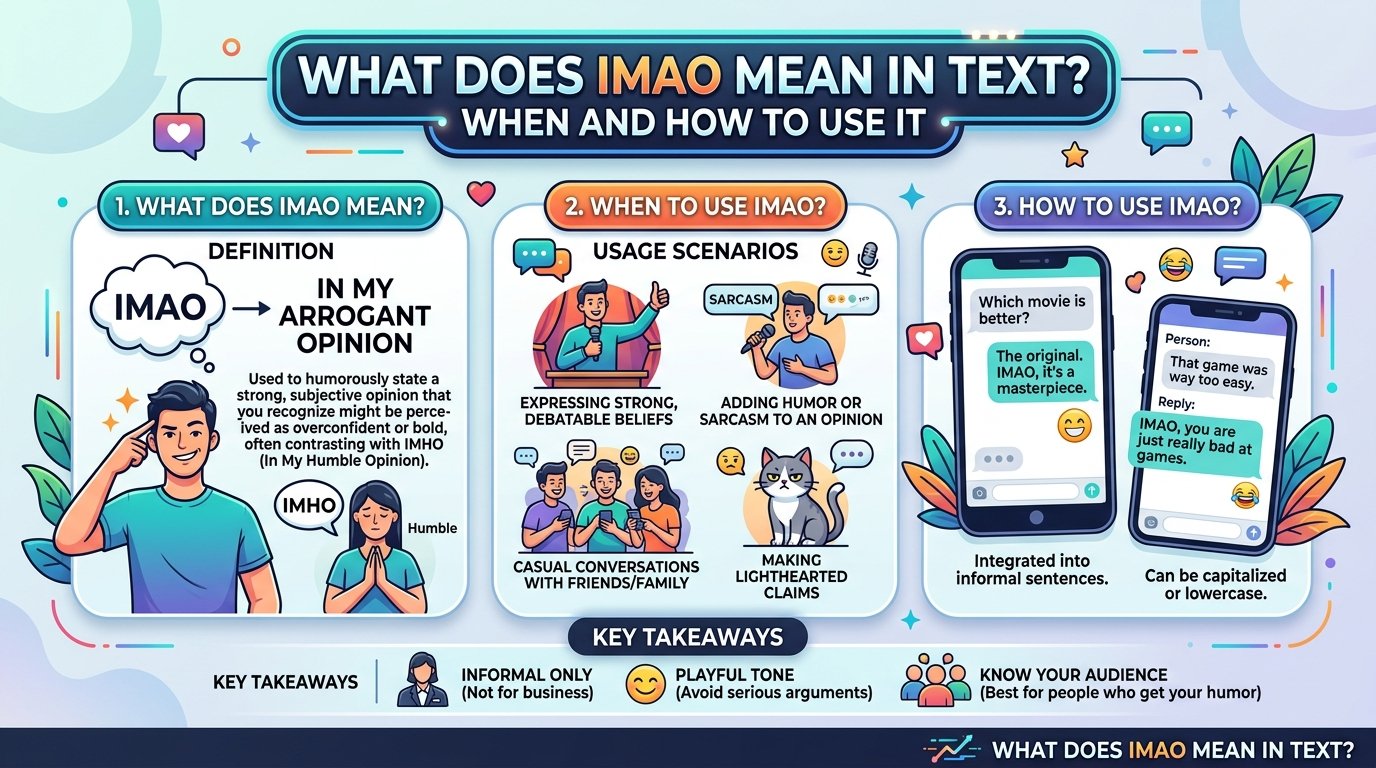
The imao meaning is usually “In My Arrogant Opinion.” It is a humorous twist on the better-known phrase IMHO, which means “In My Humble Opinion.” The joke comes from replacing “humble” with “arrogant,” which gives the phrase a sarcastic and exaggerated feel.
People do not usually use IMAO because they truly want to sound rude. Most of the time, they are being playful. It is a way to say, “I have a strong opinion, and I know I am being dramatic about it.” That is why the phrase works so well in casual online conversation.
For example, someone might write, “IMAO, my homemade burger is better than anything from a restaurant.” The writer is not making a serious claim about being a chef. They are joking and adding personality to the message.
When people search for what does imao mean in text, they are often trying to figure out whether the sender is serious or sarcastic. Context matters a lot because internet slang depends on tone, relationship, and the setting of the conversation.
The phrase is most common in informal spaces like group chats, social media comments, gaming chats, and online forums. It is not a good fit for formal emails, work messages, or serious discussions because the humor may not land the way the writer expects.
How IMAO Became Popular Online
Internet slang grew because people wanted faster and more expressive ways to communicate. Early chat rooms, message boards, and online communities encouraged short forms that saved time and added personality.
The imao meaning became popular because it fit neatly into that style of communication. It took a familiar opinion phrase and turned it into a joke. That made it useful for people who wanted to sound confident without sounding too serious.
Other abbreviations like LOL, BRB, and IMHO helped shape the same culture. These short forms were not just about saving keystrokes. They also helped people show emotion, attitude, and humor in plain text.
Understanding the also helps explain why internet language spreads so quickly. A small change in wording can completely change the tone of a sentence. “In my humble opinion” sounds polite. “In my arrogant opinion” sounds funny and self-aware.
Over time, some slang terms fade while others stay recognizable. IMAO is not as common as some newer expressions, but many people still understand it. That makes it one of those phrases that can still work well when used in the right setting.
When Should You Use IMAO?
For anyone asking what does imao mean in text, the main thing to remember is that it belongs in casual conversation. It works best when you want to make a strong opinion sound light, funny, or exaggerated.
A good example would be: “IMAO, this is the best pizza topping combination ever.” The sentence is clearly playful. Nobody expects a serious ranking of pizza toppings. The phrase adds humor and makes the message feel more relaxed.
Knowing the imao meaning makes it easier to decide when the phrase fits. Use it when the other person understands your tone and when the conversation already feels informal. It can work well in:
- Friendly group chats
- Social media replies
- Gaming conversations
- Online communities
- Messages between people who enjoy sarcasm
It is better to avoid IMAO in situations where clarity matters more than humor. A workplace message, customer service reply, school assignment, or formal email should usually stay direct and simple.
Audience matters too. Not everyone knows internet slang, and some people may read the phrase literally. If the other person is not familiar with online abbreviations, the joke may be lost or misunderstood.
Real-World Examples of IMAO Usage
Internet conversations make the imao meaning easier to understand because the tone is usually obvious from the context.
Example 1: Friends talking about food
Person A: “I tried making tacos at home.”
Person B: “IMAO, you probably invented the greatest taco recipe ever.”
The second person is clearly joking. The phrase adds a playful tone instead of a serious judgment.
Example 2: Gaming chat
A player might say, “IMAO, my strategy was perfect. The team just needed to catch up.”
This sounds like friendly bragging after a match. The writer is not being truly arrogant. They are making fun of their own confidence.
Example 3: Movie discussion
Someone might comment, “IMAO, that side character carried the whole movie.”
Here the writer is giving a strong opinion, but the wording keeps it light and conversational.
Example 4: Everyday texting
A person could text, “IMAO, I make the best coffee in this house.”
That sounds like teasing, not a serious claim. The phrase helps the message feel fun instead of competitive.
These examples show why what does imao mean in text depends on context. The same letters can feel funny, sarcastic, or confusing depending on who is speaking and how the message is written.
Common Mistakes and Misconceptions About IMAO
People often confuse the imao meaning with other abbreviations, especially LMAO. That is one of the biggest mistakes. LMAO means “Laughing My Ass Off,” while IMAO is about opinion, not laughter.
Another common misunderstanding is assuming that someone using IMAO is actually arrogant. In most cases, the opposite is true. The phrase is usually self-aware humor. The writer is joking about sounding overly confident.
Some people also think internet abbreviations always have one fixed meaning. That is not true. Online language changes depending on the platform, the group, and the tone of the conversation.
A different mistake is using IMAO in serious situations. Because the phrase has a joking tone, it can weaken a message that needs to sound professional or respectful.
People also sometimes assume everyone knows slang. That can create confusion, especially when texting someone who does not spend much time online.
Before using the phrase, ask yourself:
- Is this a casual conversation?
- Will the other person understand the joke?
- Could the message sound rude without context?
- Is there a better, clearer way to say this?
These questions help you use the phrase in a way that adds personality instead of confusion.
IMAO vs Similar Internet Abbreviations
The imao meaning changes a little when you compare it with similar abbreviations.
IMAO vs IMHO
IMHO means “In My Humble Opinion.” It is polite and soft. IMAO means “In My Arrogant Opinion,” which makes it more sarcastic and playful.
Example:
IMHO: “IMHO, this book is worth reading.”
IMAO: “IMAO, this book is the greatest thing ever written.”
The first sounds sincere. The second sounds exaggerated on purpose.
IMAO vs LMAO
LMAO means “Laughing My Ass Off.” It describes a reaction to something funny. IMAO introduces a humorous opinion.
Example:
LMAO: “That clip was hilarious.”
IMAO: “IMAO, that was the funniest clip on the internet.”
They can appear in the same conversation, but they do different jobs.
IMAO vs LOL
LOL means “Laugh Out Loud.” It is one of the most familiar internet abbreviations. IMAO is more specific because it adds a joking opinion rather than just a reaction.
Understanding the imao meaning alongside these other phrases helps you read online messages more accurately and respond in the right tone.
Why Internet Slang Matters in Modern Communication
Short expressions like IMAO show how language changes to fit the way people talk online. Text messages and social media posts do not always include facial expressions or voice tone, so people use abbreviations, emojis, and punctuation to fill in the gaps.
A sentence like “That is the best idea ever” could sound serious. Add IMAO, and it becomes playful. That small change can completely shift how the reader understands the message.
For people searching what does imao mean in text, the bigger lesson is that online language is about tone as much as meaning. The words themselves matter, but so does the attitude behind them.
Internet slang also creates a sense of connection. People who understand the same expressions often feel like they are part of the same conversation style. That is one reason these short forms stay popular.
Still, slang should be used carefully. Good communication means choosing words that fit the audience, the setting, and the purpose of the message.
Frequently Asked Questions
What does imao mean in text?
IMAO usually means “In My Arrogant Opinion.” It is a joking way to share a strong opinion and is often used in casual online conversations where sarcasm or exaggeration fits the tone.
What is the imao meaning?
The imao meaning is a playful twist on IMHO. Instead of “humble,” it uses “arrogant” to create a sarcastic or humorous effect. People use it to make opinions sound exaggerated on purpose.
Is IMAO the same as LMAO?
No. LMAO means “Laughing My Ass Off” and refers to laughter. IMAO is about opinion, not reaction. They may appear in similar chats, but they serve different purposes.
Is IMAO rude?
Usually, no. Most people use it as a joke rather than a serious insult. Still, tone matters, and it can sound rude if the other person does not understand the humor.
Where is IMAO commonly used?
IMAO is most common in informal spaces like text messages, social media comments, gaming chats, and online forums. It is not usually a good fit for formal or professional writing.
How should I use IMAO correctly?
Use it before a playful or exaggerated opinion. For example: “IMAO, this is the best sandwich in town.” It works best when the conversation is casual and the humor is easy to understand.
Conclusion
Understanding what does imao mean in text helps you read online messages with more confidence. The phrase is usually a humorous way of saying “In My Arrogant Opinion,” and it is meant to sound playful rather than truly rude.
Once you understand the imao meaning, it becomes easier to spot sarcasm, exaggeration, and casual humor in chats and comments. That makes digital communication smoother and less confusing.
IMAO works best when the audience knows the joke and the setting is informal. Used well, it adds personality to a message. Used in the wrong place, it can sound awkward or unclear. Knowing the difference is what makes the abbreviation useful.